A 1,000kg bag can simplify fertiliser procurement, but only when the urea grade, handling method and delivery plan match the operation. Urea in 1000kg jumbo bags is a practical supply format for commercial farms, blenders, distributors and industrial buyers that need concentrated 46% nitrogen without the handling burden of hundreds of small bags.
For a buyer moving regular tonnage, the decision is not simply between bagged and bulk material. It is about protecting product condition, controlling labour costs, maintaining traceability and ensuring that material can move efficiently from port, warehouse or depot into a spreader, blending line or production process.
Why choose urea in 1000kg jumbo bags?
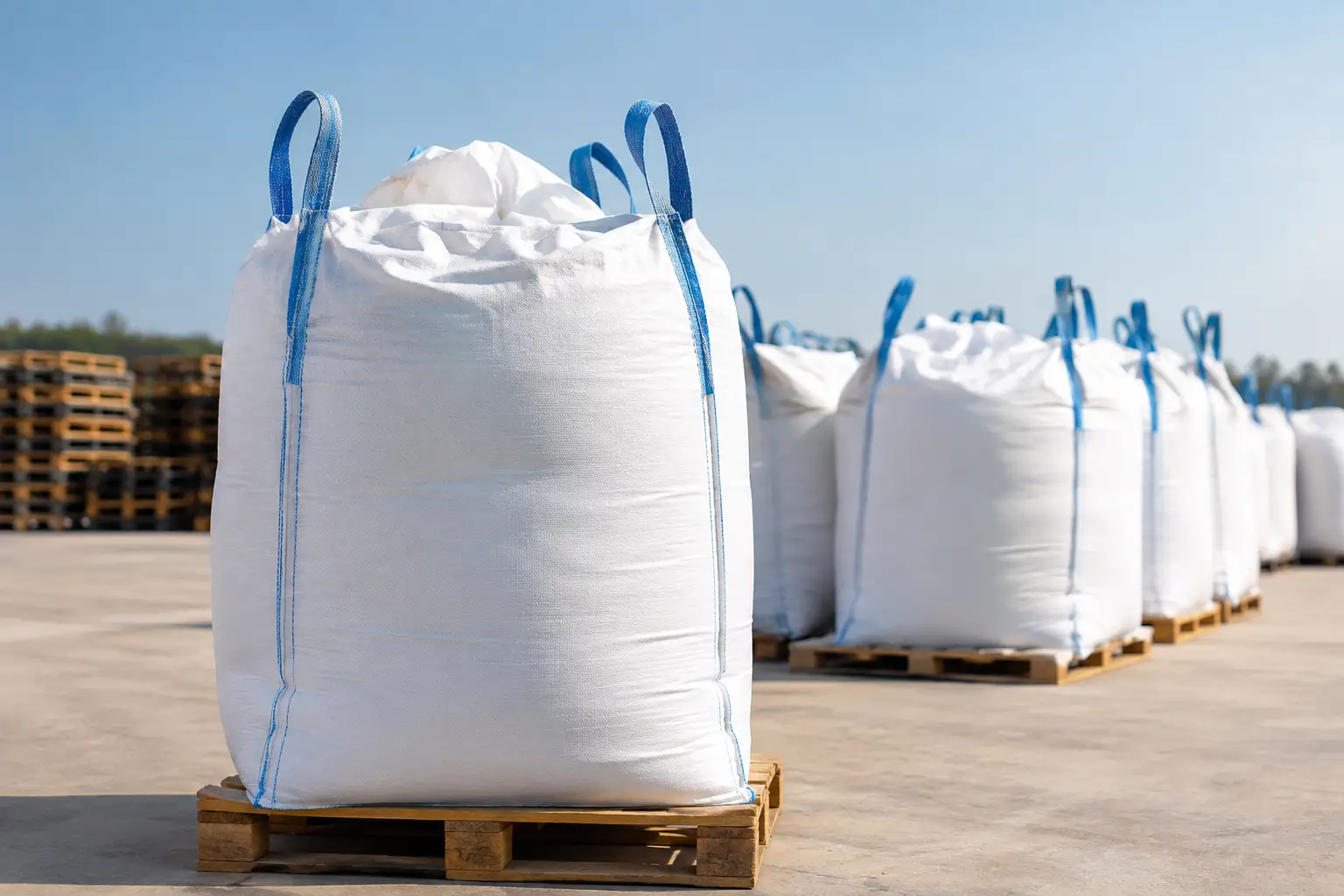
Jumbo bags, also known as FIBCs, combine a useful unit size with flexibility at destination. Each bag normally contains one metric tonne of urea, making stock reconciliation, transport planning and invoicing more straightforward. For sites without a suitable bulk storage shed or conveyor system, they provide a contained alternative to loose bulk cargo.
The format is particularly effective where product must be stored temporarily before use. A free-flowing granular urea product in sealed, moisture-resistant packaging is easier to keep segregated by grade or batch than loose material. This matters to fertiliser distributors handling several product types, and to blenders that must keep nitrogen sources separate before formulation.
Jumbo bags also reduce manual handling compared with 25kg or 50kg packs. A forklift, telehandler or suitable lifting frame can move a tonne at a time using the bag’s lifting loops. This improves loading speed at a depot or farm store, provided the equipment, floor condition and operator procedures are suitable.
There are trade-offs. A 1,000kg bag is not suitable for every customer. Small farms without lifting equipment may be better served by 50kg bags, while high-throughput blending facilities and large terminals may obtain better handling efficiency from bulk vessel, rail or loose lorry deliveries. The most economical format depends on total volume, available equipment, storage capacity and how quickly the material will be consumed.
Select the grade before confirming the packaging
The bag format does not define the urea’s application. Grade selection comes first.
Granular urea for agricultural application
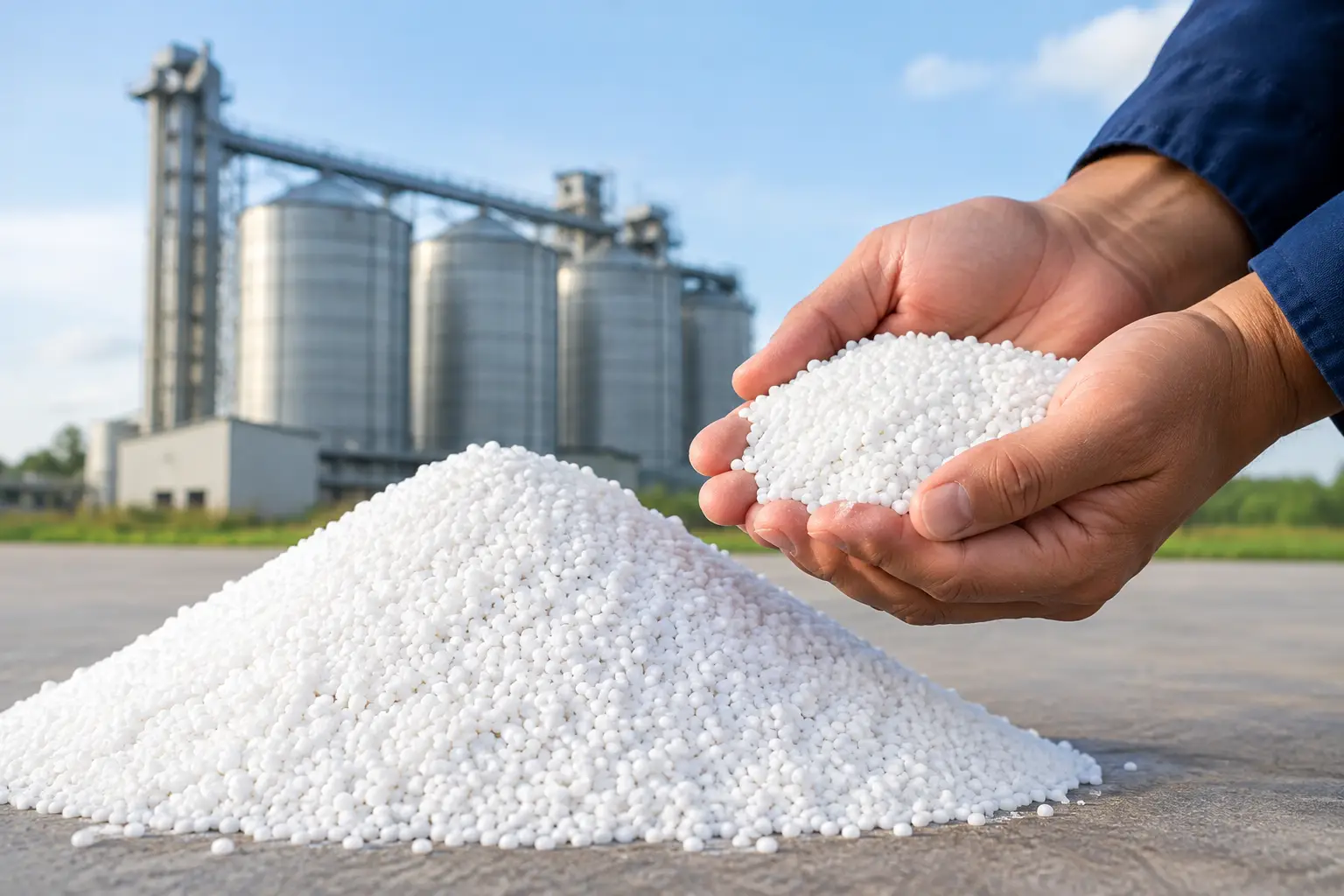
Granular urea containing 46% nitrogen is generally specified for bulk blending and mechanised field application. Its particle size and physical strength should support reliable spreading, minimise segregation in blends and maintain a consistent application pattern. Buyers should confirm the agreed particle-size range, moisture content, biuret level and free-flowing condition before placing an order.
For direct agricultural use, the practical question is whether the product will run correctly through the customer’s spreader and fit the farm’s nutrient programme. Granular urea can be a cost-effective nitrogen source, but losses can occur when surface-applied urea is exposed to unsuitable weather or remains unincorporated. Application timing, soil conditions and the use of urease inhibitors should be considered by the agronomist or farm manager rather than assumed from the packaging format.
Prilled urea for dissolution and formulations
Prilled urea is often selected where rapid dissolution is the priority, including liquid-fertiliser preparation and certain industrial processes. It may not offer the same handling characteristics as a granular agricultural product, so it should not be substituted without checking the intended use.
A buyer requiring dissolution performance should state the application clearly in the enquiry. This allows the supplier to quote the appropriate grade and provide relevant specification details rather than supplying a general-purpose agricultural product that may not meet process requirements.
Low-biuret technical and DEF-grade urea
Technical applications require closer specification control. Low-biuret urea may be required for industrial processing, while Diesel Exhaust Fluid production demands urea that meets the applicable purity requirements for DEF manufacture. Agricultural granular urea should not be treated as automatically interchangeable with technical or DEF-grade material.
For these purchases, documentation is central to the decision. The buyer should request a certificate of analysis, confirm biuret and moisture limits, identify any relevant quality standard and establish whether the product is intended specifically for the proposed process. A competitive price is only useful if the material is compliant at point of use.
What commercial buyers should specify
A clear enquiry avoids delays and allows a quote to reflect the actual landed requirement. Stating only “one container of urea” leaves important questions unanswered, particularly where destination handling and grade compliance affect cost.
The most useful purchasing information includes the required urea grade, total quantity in metric tonnes, packaging preference, destination port or warehouse, and required delivery period. For agricultural granular urea, specify whether the material is for direct spreading or bulk blending. For technical supply, state the process and any critical limits for biuret, moisture, particle size or purity.
Buyers should also confirm whether the destination can receive containerised jumbo bags, break-bulk cargo or palletised deliveries. A port delivery and a final-mile delivery to a rural warehouse involve different freight planning. If onward transport is required, access restrictions, unloading equipment and local delivery appointments can all affect the final landed cost.
Storage and handling requirements
Urea is hygroscopic, meaning it absorbs moisture from the air. Once moisture enters the product, caking and reduced flowability can follow. The storage objective is therefore simple: keep bags dry, protected and off the ground.
Jumbo bags should be stored in a clean, covered warehouse with a sound floor and no exposure to rain, standing water or condensation. Where possible, retain protective outer wrapping until the product is needed. Bags should not be dragged across the floor, lifted from a single loop unless designed for that method, or stacked beyond the packaging supplier’s stated guidance.
Handling equipment must have adequate safe working capacity for a loaded bag. Forklift tines should be smooth and appropriately spaced to prevent damage to lifting loops or the bag body. Where bags are discharged above a hopper or blending line, a purpose-built bag frame and controlled cutting or discharge arrangement improves safety and limits product loss.
Stock rotation also matters. Urea does not benefit from unnecessary storage time, especially in damp conditions. Planning deliveries around the blending schedule, planting programme or production forecast helps preserve product condition and reduces working capital tied up in inventory.
Comparing jumbo bags with bulk and small packs
A 1,000kg jumbo bag is often the middle ground between loose bulk and smaller packaged units. It offers more flexibility than bulk material because it can be moved, allocated and stored by tonne. It usually requires less labour and generates less packaging handling than 50kg bags.
Bulk supply can be preferable when a buyer has dedicated covered storage, conveyors and high, predictable throughput. It can reduce packaging costs per tonne and shorten unloading times. However, bulk product requires disciplined stock management and suitable infrastructure. A wet or poorly managed bulk store can create a far greater product-quality risk than a properly protected bagged consignment.
Small bags are appropriate where sales are made through agricultural merchants or where users lack mechanical lifting equipment. Their convenience comes at a cost in packing material, manual labour and handling time. For commercial users consuming tens or hundreds of tonnes, jumbo bags commonly offer the better operational balance.
Quality control beyond the headline 46% nitrogen
The 46% nitrogen figure is essential, but it is not the complete specification. Product suitability also depends on physical condition and grade-specific chemical limits. Moisture affects storage stability, biuret can be critical for sensitive technical uses, and particle sizing influences blending and spreading performance.
Commercial buyers should seek batch-level quality documentation where required by their procurement process. The documents should correspond to the supplied grade and shipment, not merely a generic product statement. Inspection requirements, bag marking, origin information and shipment documentation should be agreed before dispatch, particularly for import programmes and onward resale.
AgroUrea Co. supplies urea across granular, prilled and low-biuret technical grades, with packaging selected to match the customer’s intended use and logistical requirements. A well-defined quote request allows the correct specification, packaging and delivery route to be assessed together.
Build the quote around landed cost, not only unit price
The lowest quoted price per tonne can become expensive if the packaging format creates delays, requires unplanned rehandling or arrives at a location unable to unload it. Procurement teams should compare offers on a like-for-like basis: urea grade, quality specification, bag weight, delivery term, freight scope, documentation and expected arrival window.
For imports, clarify whether the price applies at origin, named port or final warehouse. Consider port handling, customs clearance, storage exposure, onward haulage and any costs caused by delayed collection. A realistic delivery plan is particularly valuable before seasonal demand, when port capacity and domestic lorry availability can tighten.
The right purchase starts with a precise operational brief: grade, tonnes, bag format, delivery point and required timing. When those details are confirmed early, 1,000kg jumbo bags can provide a controlled, efficient route from international supply to field, blender or production line.